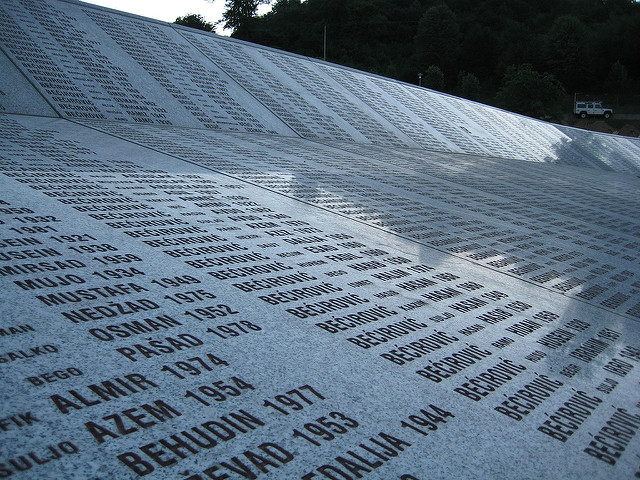

Mass violence resulted in ethnic cleansing, deportation, murders, torture, rape, concentration camps, devastation of villages, besieged cities, destruction of cultural and religious monuments and genocide. It is estimated that more than 100,000 were killed and 2 million forced to flee their homes. It was the worst act of genocide since the Nazi regime’s destruction of some 6 million European Jews during World War II.
While all sides were guilty of committing war crimes, it is estimated by UN reports that Serbian forces were responsible for 90%, Croatian forces 6% and Bosnian 4%.
Ethnic cleansing is the forced expulsion, intimidation or killing of an ethnic group. It includes the destruction of places of worship, cemeteries and cultural and historical buildings of the ethnic group. It was a common phenomenon during the war. According to ICTY indictments, Serb and Croat forces planned ethnic cleansing of Bosnian territories as planned by political leadership, in a bit to create ethnically pure states of Republika Srpska and Herzeg-Bosnia.
Towards the end of the war, Serb forces were guilty of the atrocities of the Srebrenica genocide.
A trial was brought before the International Court of Justice by Bosnia and Herzegovina against Serbia and Montenegro alleging genocide. The ICJ concluded in 2007 that Serbia failed to prevent genocide committed by Serb forces and failed to punish those responsible and bring them to justice.
In 1994 the US ambassador to Croatia informed the White House that genocide was occurring in Sarajevo by Karadzic’s Bosnian-Serb forces. They harassed minority groups to force them to leave and forced detainees to conduct dangerous work on the front line. And again in 2005 the United States Congress passed a resolution declaring that Serb aggression and ethnic cleansing met the terms defining genocide.
Courts have concluded that the crimes committed throughout the years of the war constitute crimes against humanity under international law. However, they decided that these acts in themselves did not constitute genocide.
It is estimated that between 12 000 and 20 000 women, mostly Bosnian, were raped during the war. The Bosnian Serb police and members of the Bosnia Serb forces used coordinated rape as a weapon in the war. The ICTY declared that systemic rape and sexual enslavement during war time was a crime against humanity, second only to genocide. This ruling was the first of its kind in judicial history.
Rape was most prevalent in Eastern Bosnia; Foca and Visegrad and Grbavica during the siege of Sarajevo. It was reported that women and girls were kept in detention centres and forced to live in unsavoury conditions, were mistreated and repeatedly raped. Surviving women have reported psychological, gynaecological and physical disorders including pregnancies and sexually transmitted diseases.


